
Everything your practice runs on. Built as one system.

Most practice management is a set of modules that happen to share a login. Sodium was built as one thing, so winning a client, onboarding them, doing the work, billing it and keeping them informed are all the same continuous flow. Here is how it fits together.

Looking for something specific? Jump to the full feature list · See what's new

Win the work

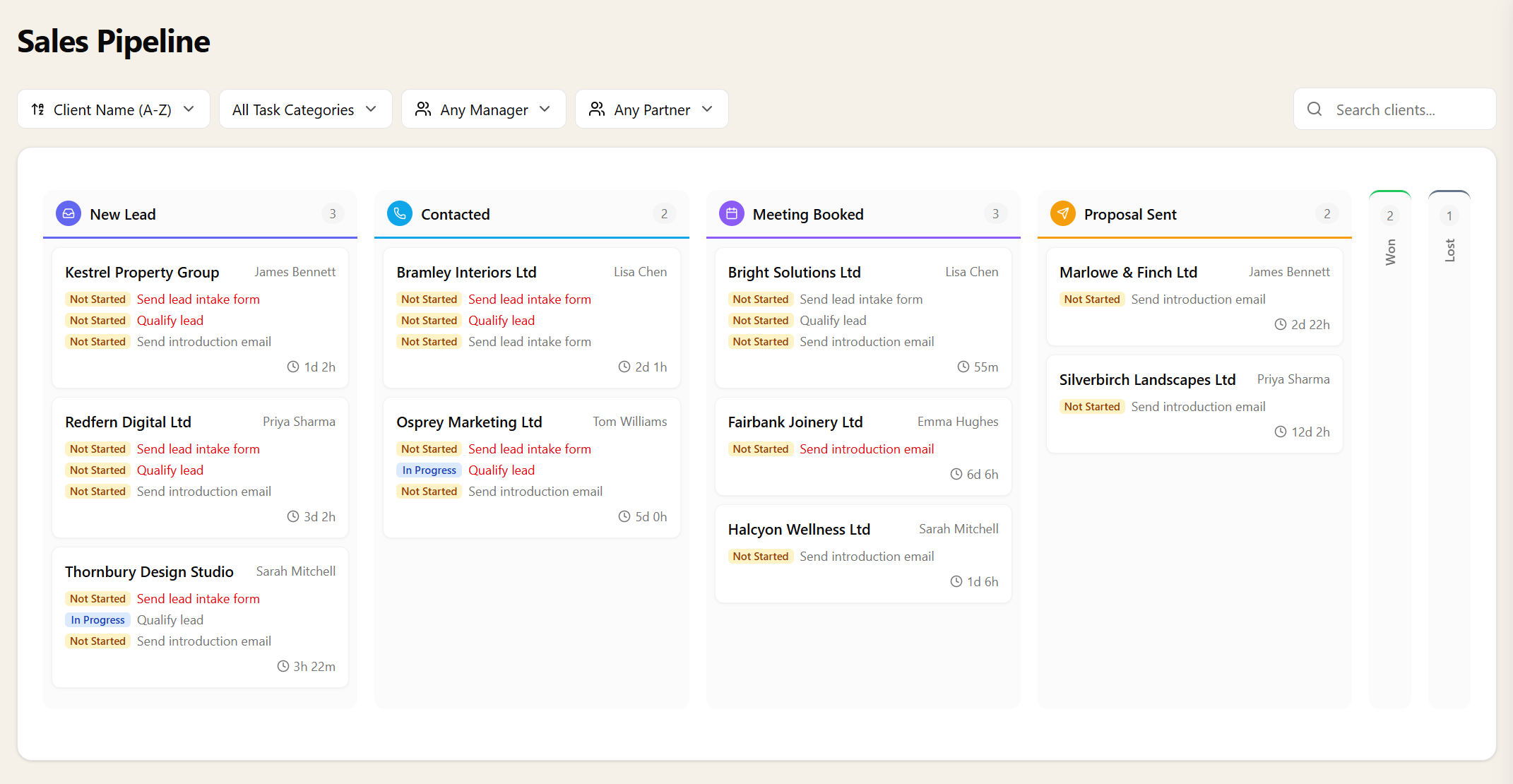
Track prospects through a drag-and-drop pipeline, price the job from your own service catalogue, and send a proposal the client can accept and sign online. No separate CRM, no re-keying what you already wrote down.

None of it is compulsory. If a pipeline isn't how you win work, add clients by hand or import your existing list in one go and start from there. Nothing here forces a way of working on you.

The Sodium sales pipeline, showing prospects moving through stages from enquiry to won

Do the work

Add a service to a client and the tasks it needs turn up on their own schedule, so nothing depends on someone remembering to create them. Each task can carry a workflow, and the steps in that workflow do real work rather than just ticking a box — sending an email, requesting records, collecting an approval, moving a service on to its next stage.

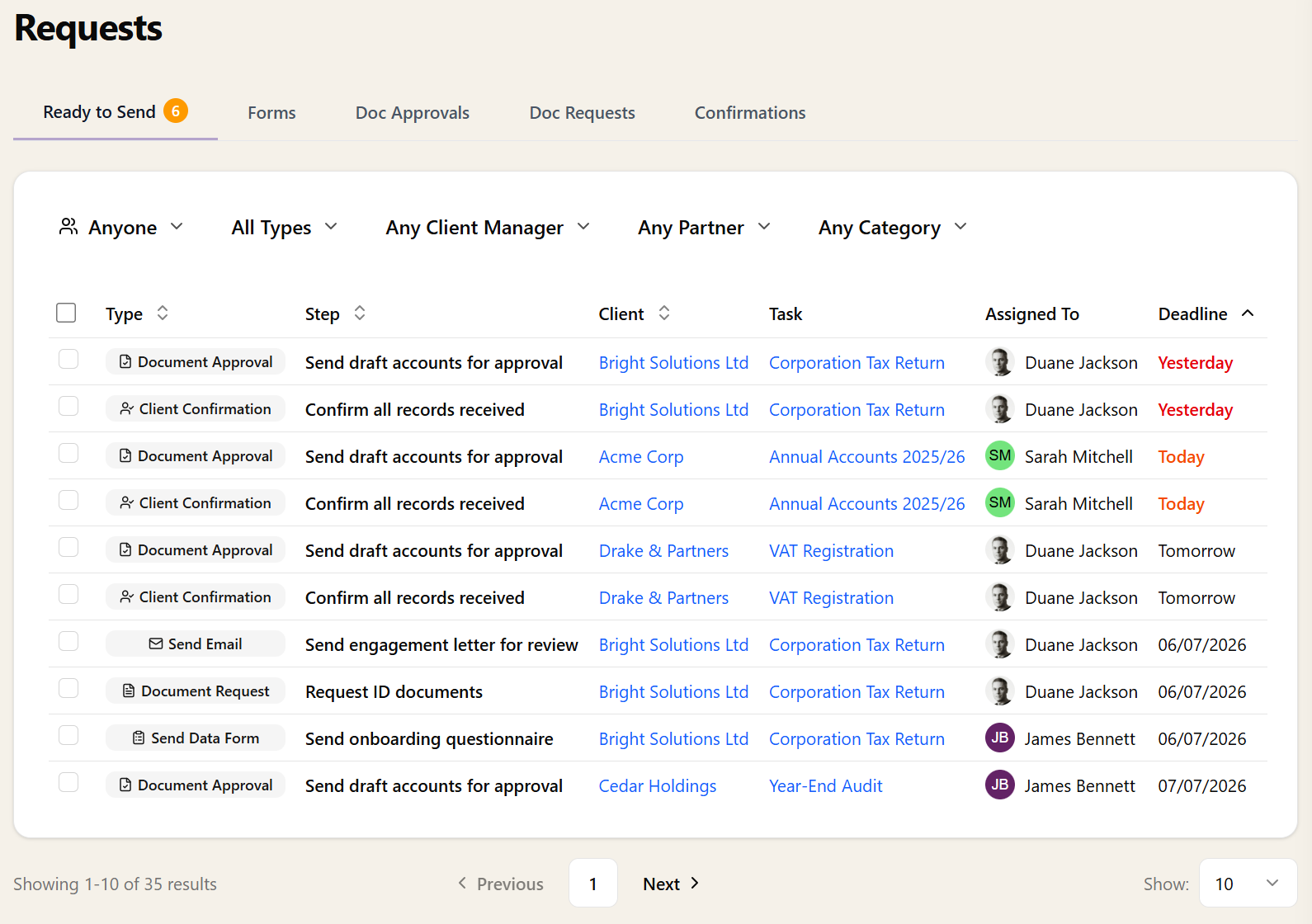
Where a step needs a person to look before anything leaves the building, it waits on the Requests screen. That gives you one place to review and send, instead of hunting through tasks to find what is outstanding.

The Requests screen listing emails, document requests and approvals waiting to be sent
James Ebdon
The flexibility in how we can configure things is incredible, and I'm really impressed with what it can do. James Ebdon, bpcpartners.co.uk

Keep clients in the loop

Your clients never have to sign up for anything. Document requests, approvals and forms all reach them as a secure link by email — they click it, do what you asked, and that is the end of it. No account, no password, nothing to log in to and forget.

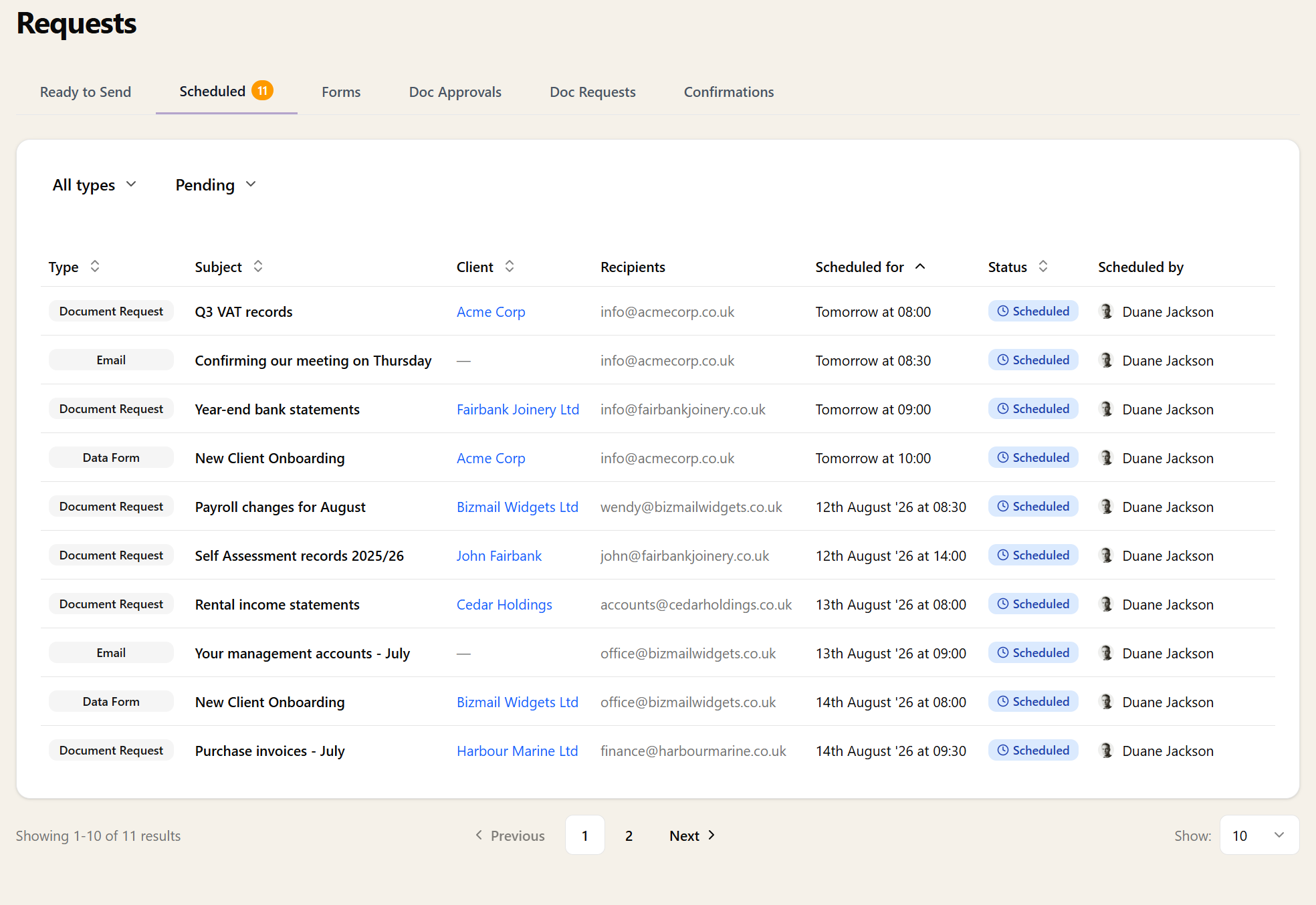
The branded portal is there if you want to give clients somewhere permanent to look, but it is entirely optional and none of the above depends on it. Either way, requests chase themselves to a schedule you set, approvals keep a full audit trail, bulk email goes out personalised per client, and a connected mailbox brings the replies back onto the client record.

A document request scheduled to go out to a client with automatic chasing

Know where the practice actually stands

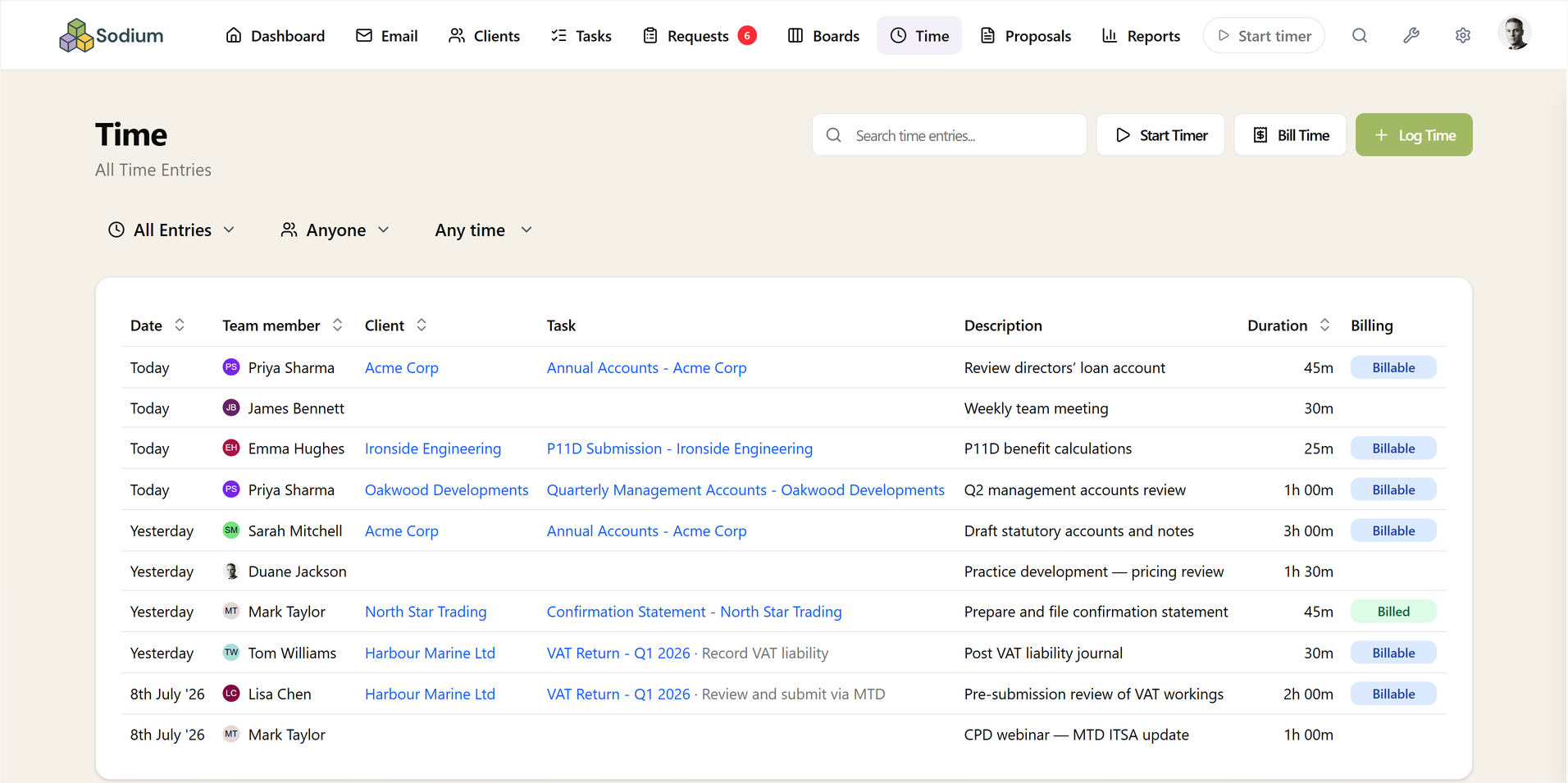
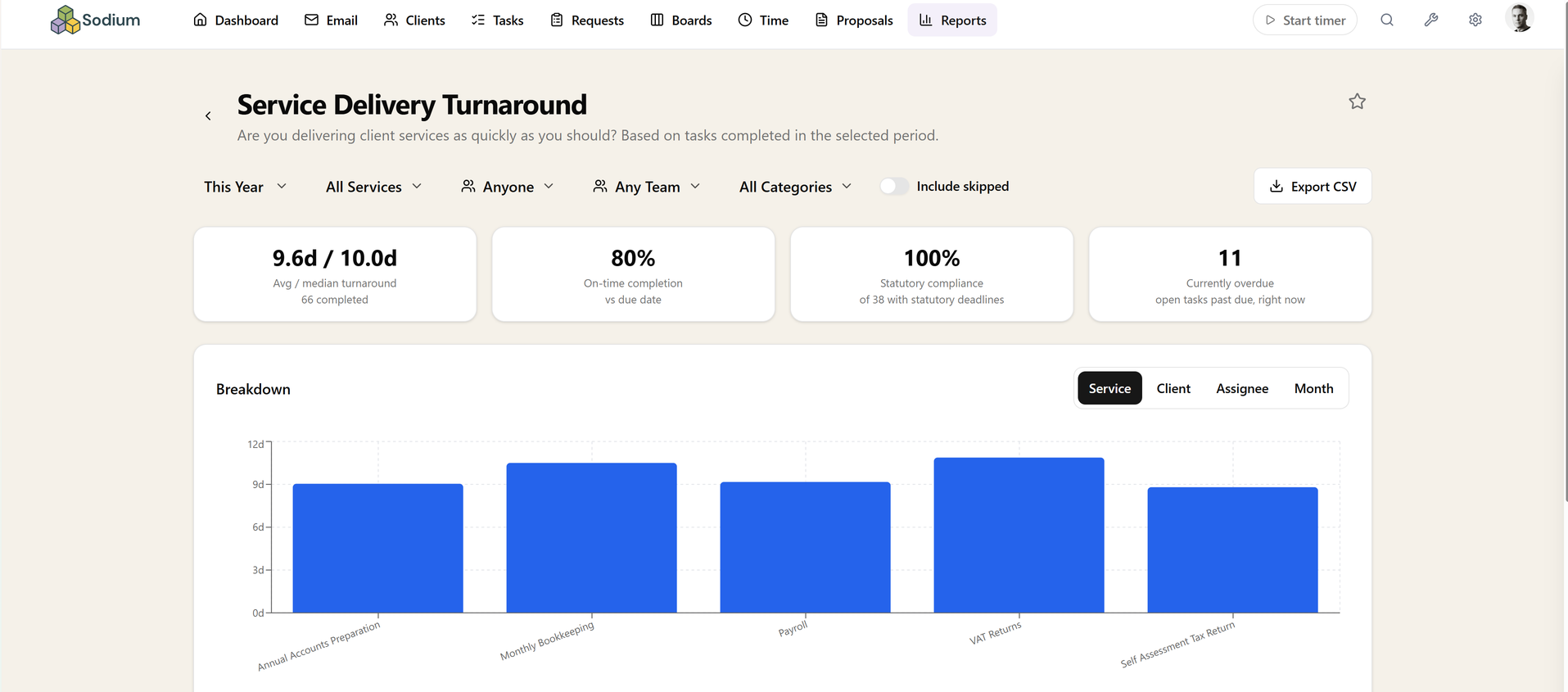
Eight reports over your own operational data, rather than a dashboard of numbers that flatter you. How long services really take against what you quoted for them, which deadlines you are hitting, which clients never reply, where workflows stall, who is overloaded, and what is sitting in work in progress still unbilled.

Each one drills through to the records behind it, so a number you do not like is one click away from the list of things causing it.

The service delivery report showing turnaround times across the practice

And the platform underneath all of it

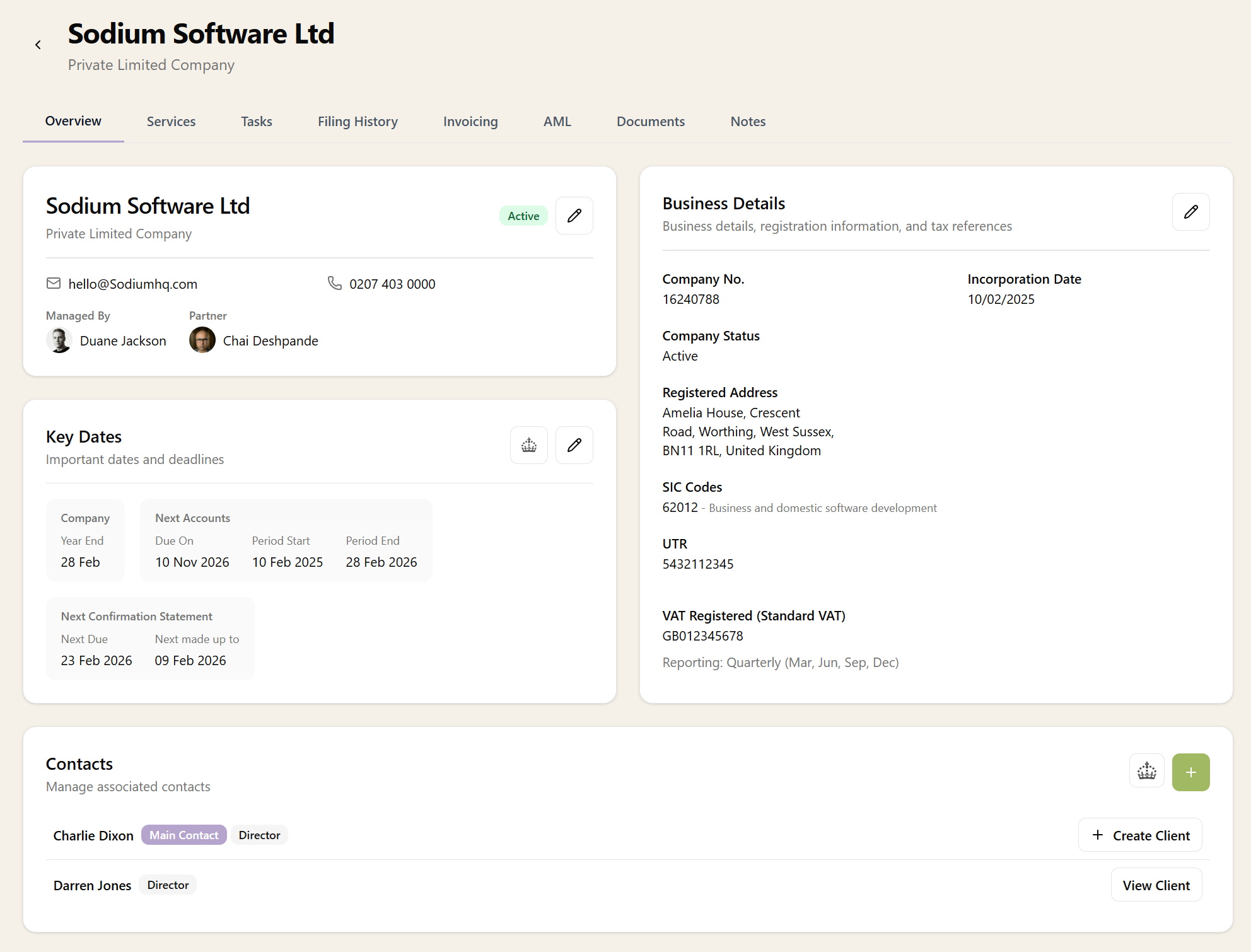
One client record everything else hangs off, enriched from Companies House and shaped with your own custom fields. Permissions built around your practice rather than someone else's idea of it. Plus a full API and an MCP server, so your AI assistant can query your practice data and act on it — creating clients, updating tasks and logging time, not just answering questions.

A Sodium client record showing services, key dates, contacts and documents in one place

See it running on your own practice

Every feature switched on for the trial, Pro ones included. Nothing held back, nothing to unlock, and no card needed to start.

Every feature

Alphabetically, with search. Start typing to narrow it down.

Chris Deakin
It's going to revolutionize how we run all aspects of the accountancy practice. Chris Deakin, accrueaccounting.co.uk